Board 6 — Alumni

A Connected World

Trained here. Changed everything.

People Who Changed The World

Trained Here. Changed Everything.

For seventy years, graduates of the Faculty of Medicine and Health Sciences have gone on to lead, innovate, and make history in South Africa and across the globe.

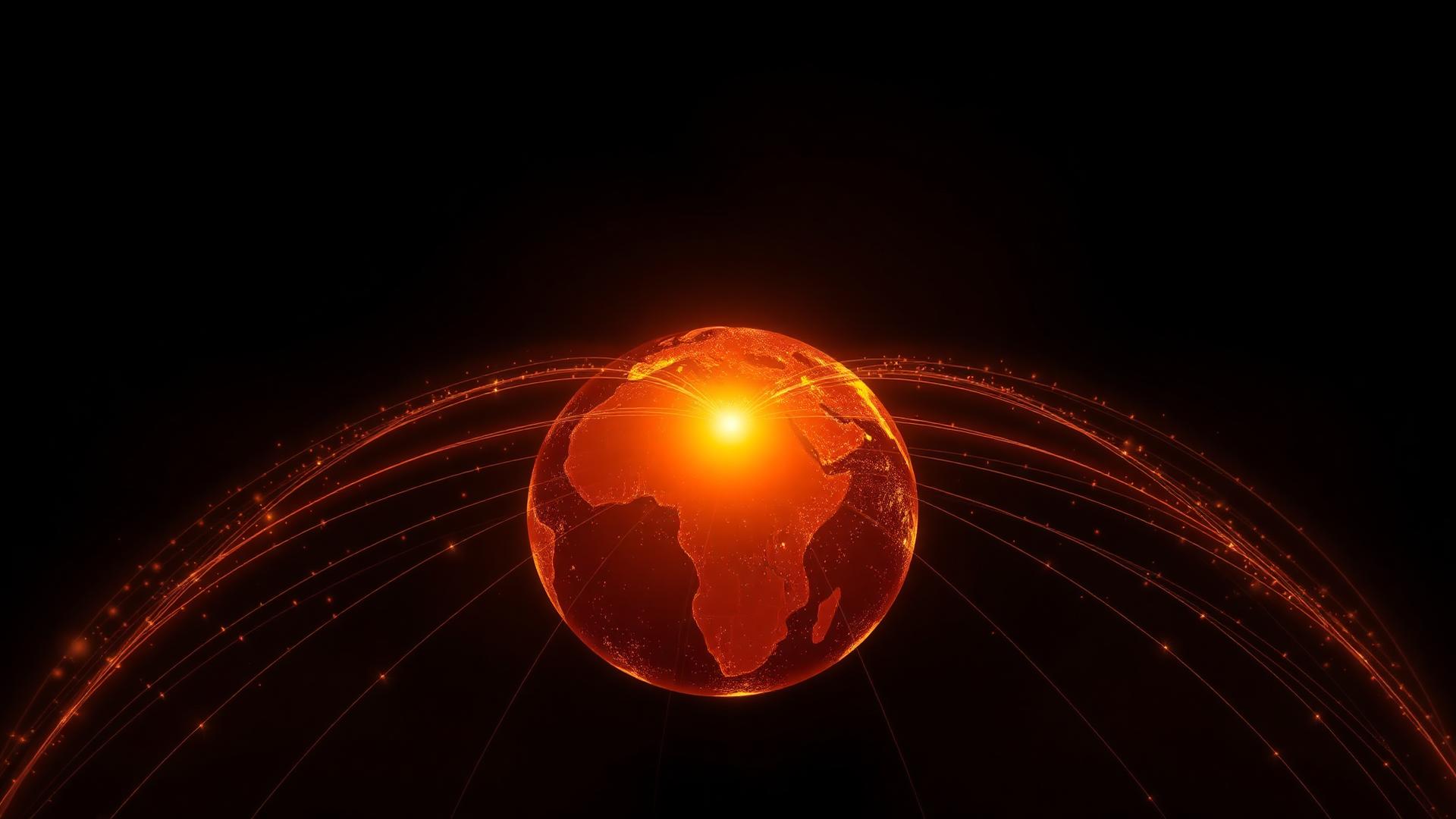
From Stellenbosch to Everywhere

A global footprint

LondonUnited StatesGenevaCameroonGautengImperial CollegeStellenbosch

From here to everywhere.

Seven Decades

A timeline of impact

1950s & 1960s

The founding generation

The faculty's earliest cohorts graduated into a South Africa that was building its academic health infrastructure almost from scratch. At the time, its work focused less on large-scale research breakthroughs and more on building the foundations of modern medical training and clinical services in the region.

GW

1970s

Specialists who built a discipline

Gerhard Walzl

MBChB, PhD (Imperial College London) | NRF A-rated researcher, SARChI Chair in Tuberculosis Biomarkers

Gerhard Walzl trained in medicine at the University of Pretoria and specialised at Stellenbosch and Tygerberg Hospital, later completing a PhD in immunology at Imperial College London. He returned to Tygerberg, shaping both his career and the field.

A research role — initially a fallback — led to the creation of the Stellenbosch University Immunology Research Group, now with over 130 scientists across six labs. He holds two TB diagnostic patents, has supervised 30+ postgraduates, and developed a finger-prick TB test suited to community use.

An NRF A-rated researcher, Walzl leads the SARChI Chair in Tuberculosis Biomarkers; his team was among the first to move into the BMRI in 2023.

DS

1980s

A new South Africa, new medicine

Prof Dan Stein (1962–2025)

PhD & DPhil, Stellenbosch University | Internationally acclaimed psychiatrist and neuroscientist

Prof Dan Stein studied medicine at the University of Cape Town, but it was at Stellenbosch that he earned doctorates in clinical neuroscience and philosophy, launching one of Africa's most distinguished scientific careers.

After psychiatry training in the United States, he returned to South Africa post-apartheid to found the MRC Unit on Anxiety and Stress Disorders at Stellenbosch — the country's first dedicated mental health research unit.

The unit led the South African Stress and Health Study, the continent's first nationally representative survey of mental disorders, at a time when mental health was largely absent from the public agenda.

Stein later chaired international workgroups shaping global diagnostic frameworks for OCD and trauma-related disorders. He authored more than 1,600 peer-reviewed publications and remained one of Africa's most-cited researchers until his death in December 2025.

AvdM

1990s

Surgical firsts

Prof André van der Merwe

MBChB, Stellenbosch University | Head of Urology, SU & Tygerberg Hospital

Prof André van der Merwe grew up in the small Northern Cape town of Sutherland, dreaming of becoming an astronomer. He ended up charting rather different territory. After completing his MBChB at Stellenbosch, he trained further in urology at the University of Cape Town, the Royal College of Surgeons in London, and the College of Medicine of South Africa, before returning to the Faculty of Medicine and Health Sciences as head of the Division of Urology.

On 11 December 2014, after years of careful planning, Van der Merwe led a surgical team in a nine-hour procedure to perform the world's first successful penile transplant. The patient, who had lost his penis due to complications of traditional circumcision, regained full function within months. While globally celebrated, the work addressed a stark local reality: each year, many young South African men suffer similar injuries.

Prof van der Merwe has since completed a second successful transplant and performed South Africa's first laparoscopic kidney removal. Stellenbosch University remains the only centre in the world to have achieved two successful penile transplants.

NC

2000s

Africa's science on the world stage

Prof Novel Njweipi Chegou

MSc & PhD, Stellenbosch University | Professor of Molecular Biology and Human Genetics, 2022 Royal Society Africa Prize Winner

Novel Chegou's path to Tygerberg began with a long walk through a Cameroonian forest to school and continued with train commutes from a Stellenbosch market stall, where he sold crafts to fund his studies. In 2005, while completing his honours degree — where he was named South Africa's top biochemistry and molecular biology honours student — he split his days between selling beadwork and attending classes at Tygerberg.

He is now a professor in the Department of Biomedical Sciences, leading the Diagnostics Research Laboratory within the SU Immunology Research Group. His work focuses on developing faster, cheaper, more accurate TB diagnostics, particularly for children and resource-limited settings, with patented tests in use globally.

In 2022, the Royal Society awarded him the Africa Prize for his contributions to TB research — recognising a journey from a forest path in Cameroon to one of science's highest honours.

TY

2010s

Evidence that changes policy

Prof Taryn Young

PhD, Stellenbosch University | Distinguished Professor, Director of the Centre for Evidence-based Health Care

Taryn Young completed her doctoral degree in public health at Stellenbosch University and built a career at the Faculty that has quietly shaped health policy across Africa and beyond.

As Director of the Centre for Evidence-based Health Care and Head of the Division of Epidemiology and Biostatistics, she has dedicated her work to a principle that sounds simple but is surprisingly rare in practice: that health decisions should be based on the best available evidence.

Her research has contributed to Cochrane reviews, the gold-standard systematic reviews used by clinicians, policymakers, and the World Health Organisation to guide treatment decisions globally.

She is a member of the Academy of Science of South Africa and has co-authored over 100 peer-reviewed publications. In a landscape where research often fails to reach the people who need it most, Young has focused on building the systems and capacities that allow evidence to travel from journals to policy documents to clinics.

DO

2020s

The next generation arrives

Dr David Obagbuwa

MBChB, Stellenbosch University, 2025 | One of South Africa's youngest-ever medical graduates

David Obagbuwa was born in Nigeria, moved to South Africa at age eleven, and enrolled in Stellenbosch University's MBChB programme at fifteen — navigating a global pandemic, social isolation, and the psychological weight of being the youngest person in every room he entered. In December 2025, at the age of 21, he graduated as one of the youngest medical doctors in South African history.

His story is not simply one of academic precocity. It is a story about what the FMHS represents at its best: a faculty that draws students from across the continent, surrounds them with world-class training, and sends them back out into communities that need them. Dr Obagbuwa has been placed for his internship in Gauteng's East Rand, where he plans to explore specialisation and research.

Your name here.

2030s

Make your mark

The next chapter is being written by the students walking these halls today. From here, they will go on to lead, discover, heal, and shape what comes next — across South Africa, across the continent, and across the world.

From Stellenbosch to every corner of the world — seventy years of graduates who lead, innovate, and make history.