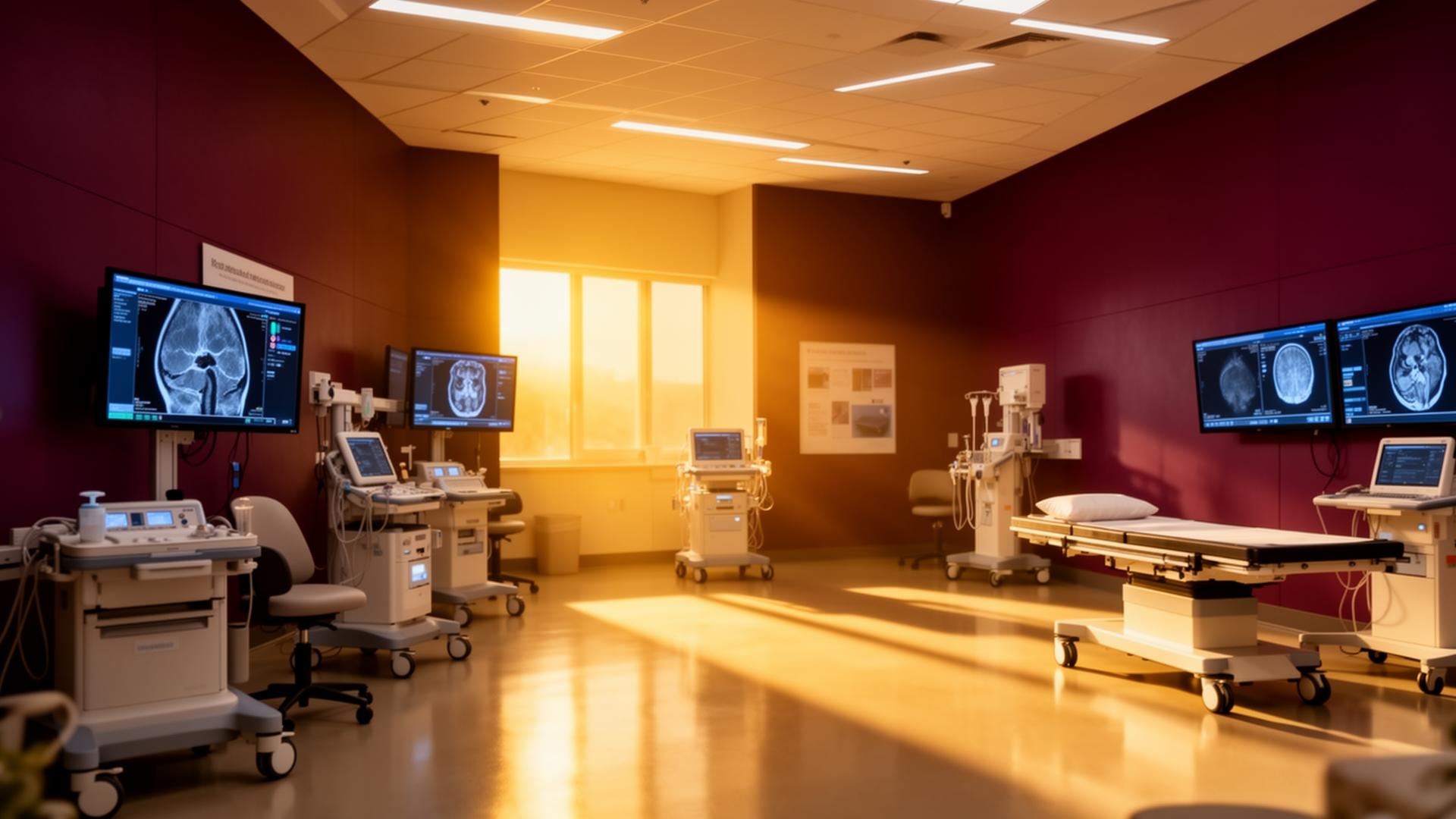
How We Learn Has Changed
The lecture hall, the simulation centre, the rural clinic — all of it is the classroom now.
Seventy Years Of Teaching
Teaching people to heal
In 1956, health sciences education at the Faculty of Medicine and Health Sciences was built around a single goal: training doctors.
Over the next seven decades, that narrow mission evolved into a quiet revolution, expanding programme by programme into a broad, inclusive vision of health sciences education.
Today, we train not only doctors but also nurses, physiotherapists, occupational therapists, dietitians, speech-language therapists, and researchers, offering more than 90 postgraduate programmes — many of which are unique in South Africa.
A student trained only in a well-resourced tertiary hospital is not prepared for the South Africa that will need them.
Then & Now
From one classroom to many
1956 — Then
One programme. One classroom. Doctors only.
2025 — Now
Six undergraduate programmes. 90+ postgraduate options. A classroom that extends from simulation labs to rural clinics.
Programme Growth
From one to ninety-six
Undergraduate · 1956
Undergraduate · 2025
Postgraduate · 2025
Disciplines today
A Curriculum Continually Reimagined
Healthcare in 2025 bears little resemblance to 1956
The curriculum has not simply grown — it has been continually reimagined in response to a changing world. The question has remained constant: what must a health professional know and be able to do for this context, this population?
The Distributed Training Platform
The classroom moves to the patient
Instead of concentrating learning in a single academic hospital, students are placed in community health centres, district hospitals, and clinics across the province, where most South Africans receive care.
There, they encounter the realities of practice: complexity, scarcity, resilience, and the lived experience of patients and clinicians.
Where most South Africans receive care
Modes Of Learning
Where learning happens now
Lecture & seminar venues
The traditional classroom, reimagined for active, case-based learning.
Digital & blended learning
Online platforms, virtual cases, and asynchronous coursework that travel with the student.
Simulation labs
SCSU and SunSkill — high-fidelity simulation that lets students rehearse before they encounter the real patient.
Community & rural clinical sites
Distributed Training Platform placements across the Western Cape, where most South Africans receive care.
"The classroom extends far beyond any single campus — from simulation labs to rural clinics, and everywhere in between."
In Their Own Words
Voices from the faculty
Karin Baatjes on teaching & learning
Video coming soon
Seventy years on, the classroom is everywhere care happens.